
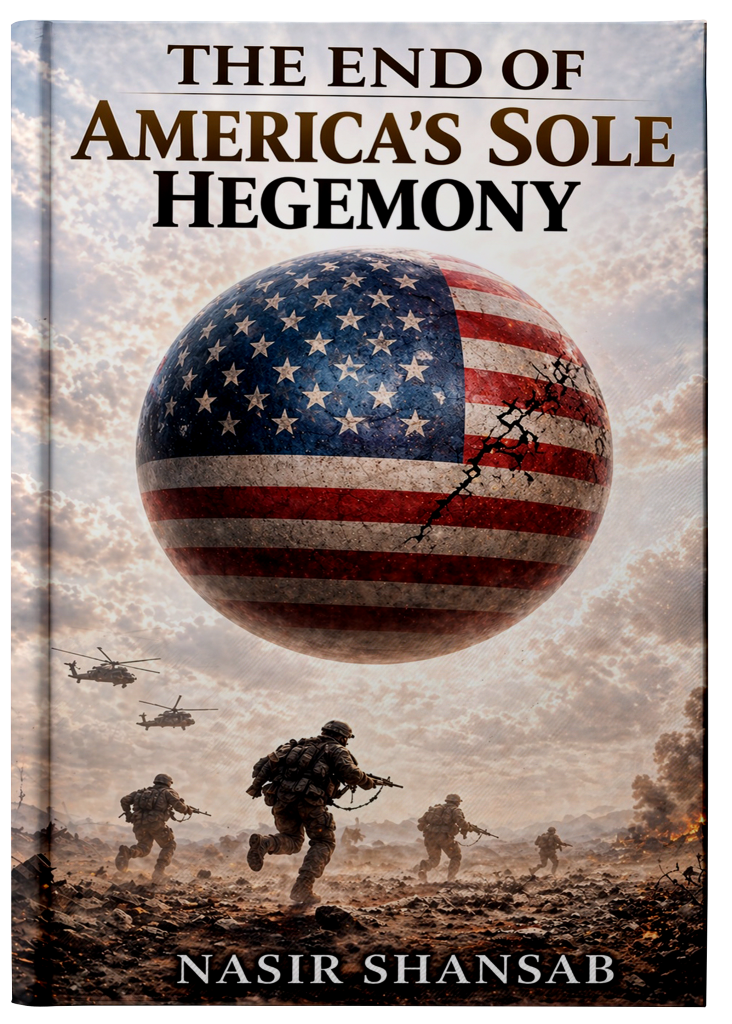
THE END OF AMERICA’S
SOLE
HEGEMONY
The End of America’s Sole Hegemony is a powerful and thought-provoking exploration of the rise and gradual decline of the United States as the world’s dominant power. In this compelling work, Nasir Shansab examines how America emerged as a global superpower in the 20th century and how its role and influence have begun to shift in the modern era.
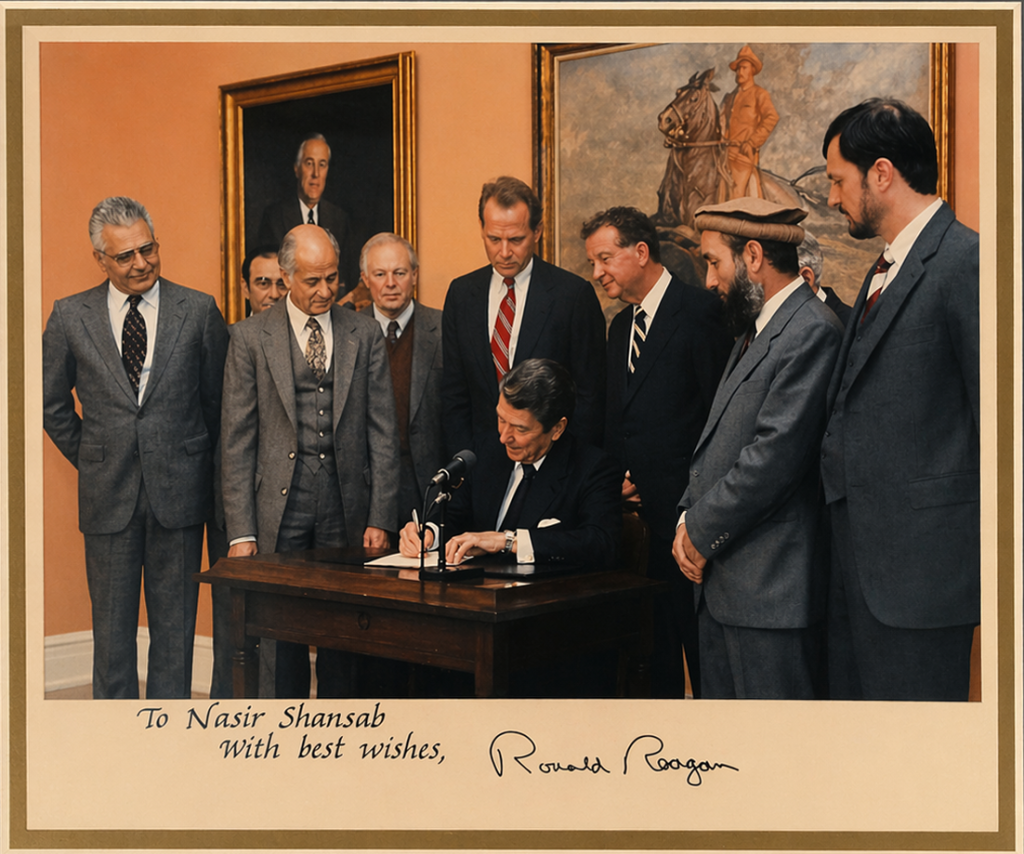
President Ronald Reagan signing Afghan Aid Directive documents
Reagan's Policy Shift That Changed the Afghan War
During the Cold War, U.S. policy toward Afghanistan shifted from limited support under President Carter to expanded covert assistance after President Reagan took office. President Reagan later signed a directive, based on prior discussions and strategic recommendations, authorizing increased military aid to the Afghan resistance through Pakistan. This included approval of advanced weapons like Stinger missiles after expert evaluation. The decision marked a major escalation in U.S. involvement, strengthening the resistance and moving from symbolic opposition to active support against the Soviet occupation.
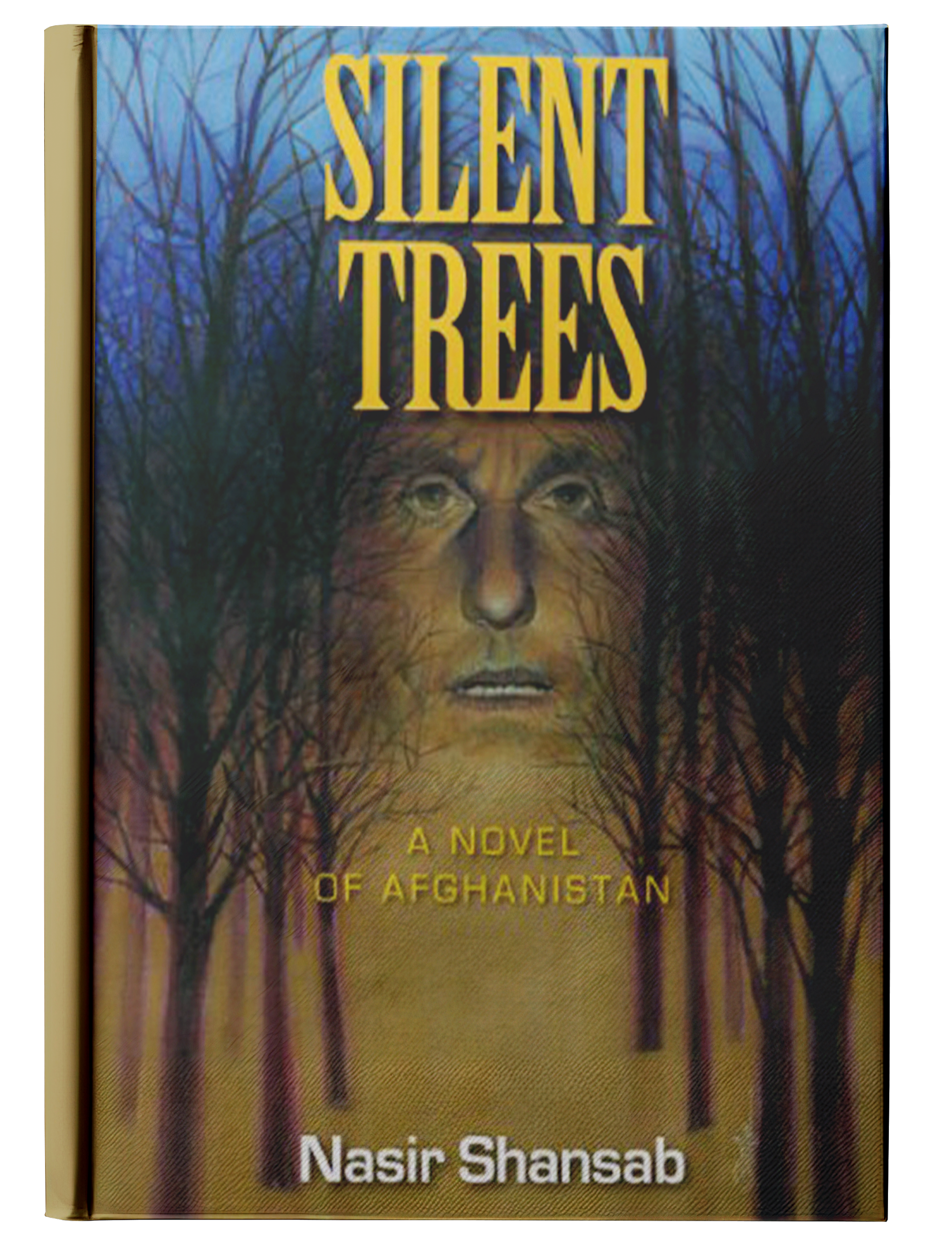
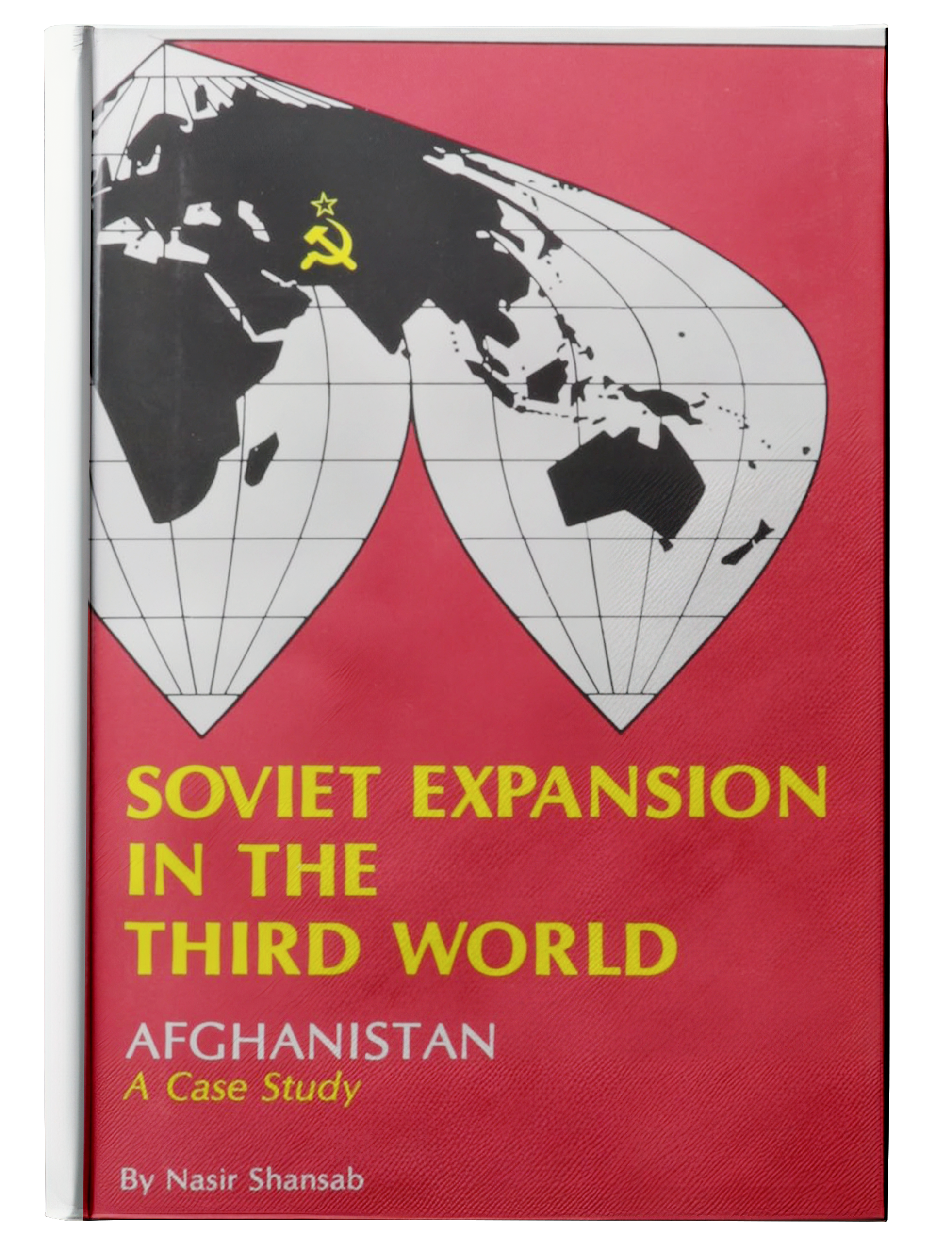
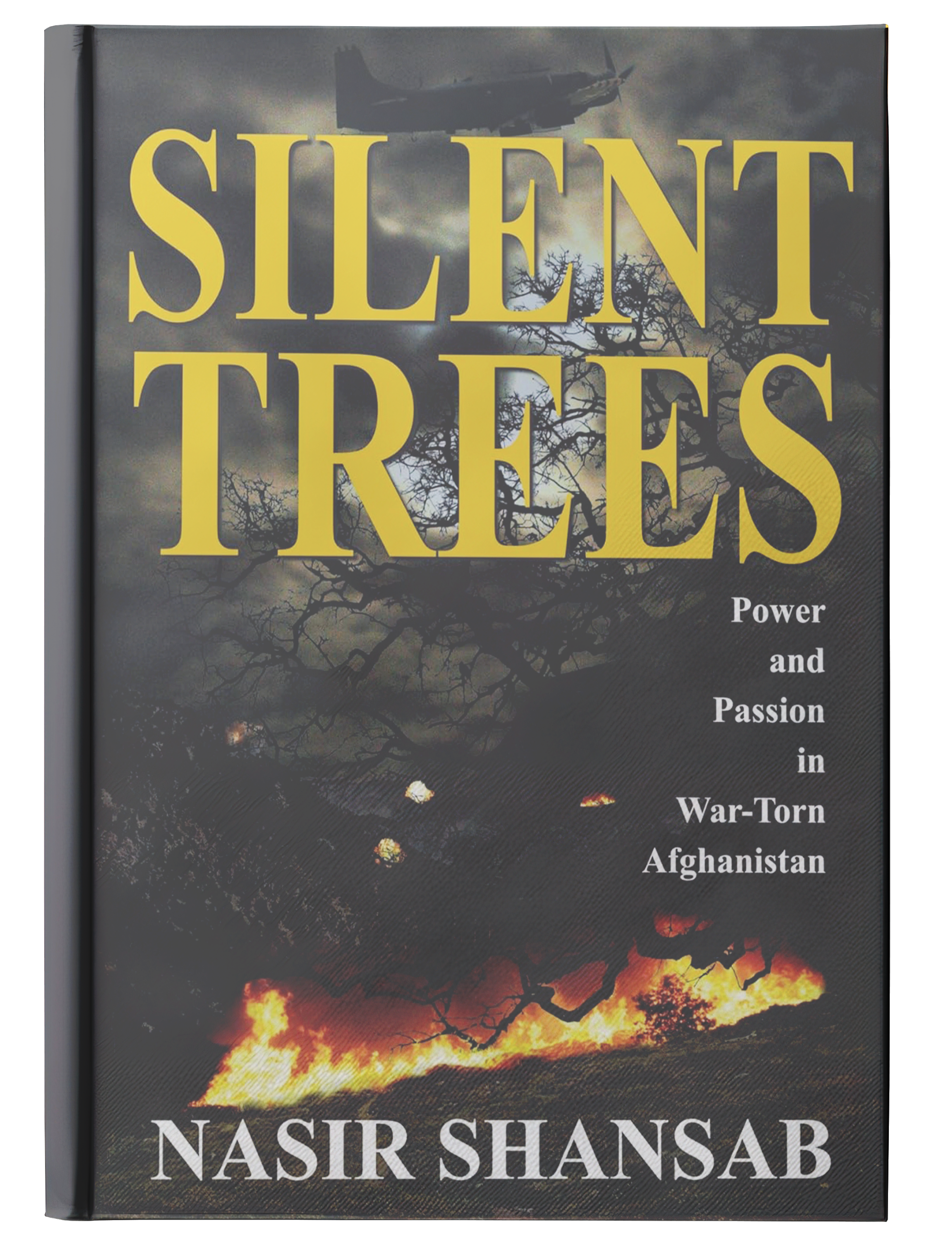
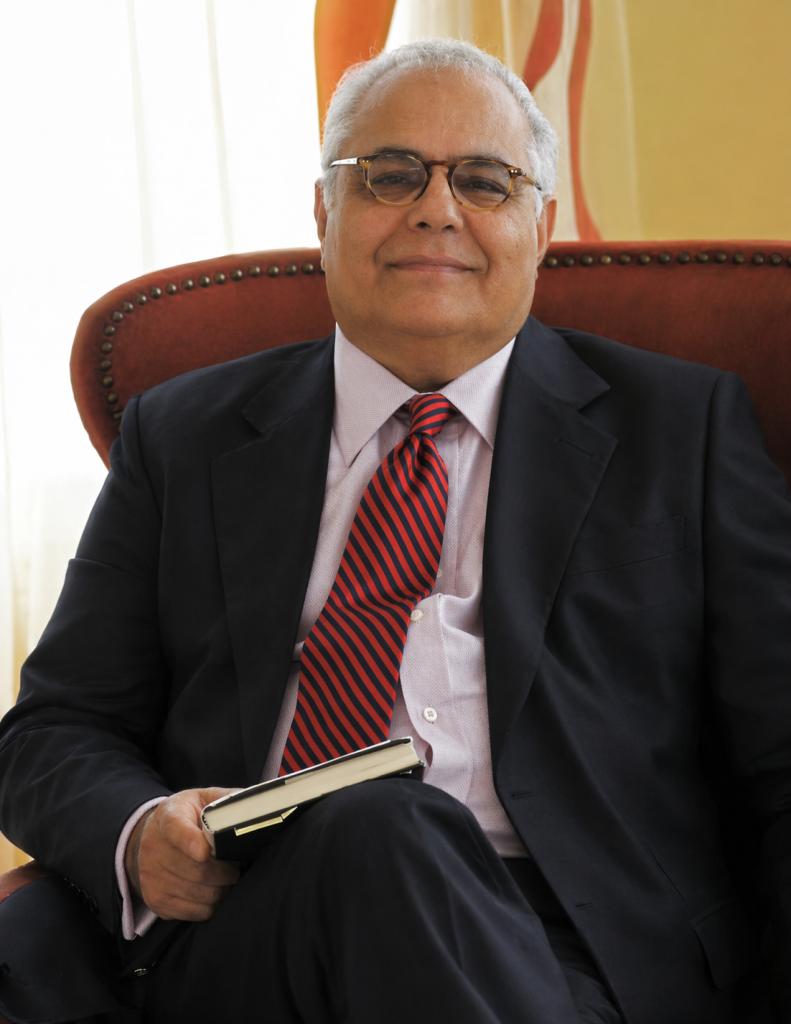
Nasir Shansab
Nasir Shansab was once one of Afghanistan’s leading industrialists before being forced to leave the country in 1975. In the years following the U.S. invasion, he has periodically returned, driven by a commitment to creating better opportunities for the Afghan people.
Our Core Values

Mission
To explore and present the shifting dynamics of global power with clarity and depth. We aim to help readers understand history, conflict, and leadership through a human-centered lens.

Approach
We combine historical analysis with real human experiences to tell meaningful stories. Our approach blends research, insight, and narrative depth to make complex ideas accessible.

Vision
To create awareness about the changing world order and its impact on future generations. We envision a world where knowledge drives thoughtful dialogue and informed global perspectives.
Moments That Matter
The End Of America's
Sole Hegemony
The End of America’s Sole Hegemony is a powerful and thought-provoking exploration of the rise and gradual decline of the United States as the world’s dominant power. In this compelling work, Nasir Shansab examines how America emerged as a global superpower in the 20th century and how its role and influence have begun to shift in the modern era.
Blending historical insight with emotional depth, the book moves through the devastation of World War I and World War II, the ideological tensions of the Cold War, and the evolving dynamics of global politics. It highlights not only the strategies of nations but also the human cost of war and power struggles.
Latest from the Blog
What Readers Are Saying
This book is not an easy read in terms of subject matter, but it is an important one. Nasir Shansab presents a deeply reflective and sometimes unsettling analysis of America’s role in the world, especially in Afghanistan. What stood out to me was the author’s willingness to question decisions that many people take for granted. The sections on Afghanistan felt particularly powerful because they weren’t just political commentary; they were grounded in lived observation and long-term reflection. This book challenges you to think, and that’s what makes it worth reading.
I went into this expecting a typical geopolitical critique, but it turned out to be much more layered. The author connects history, economics, and culture in a way that makes the bigger picture easier to understand. What I appreciated most was how the book doesn’t just criticize U.S. policy but also explains how and why certain decisions were made, even when they led to failure. It feels like a serious attempt to understand rather than simply judge.
This book offers a rare combination of personal insight and global analysis. The author’s perspective on Afghanistan and the long-term consequences of foreign intervention felt honest and, at times, sobering. There’s a sense throughout the book that many of these outcomes were predictable, which makes the analysis even more impactful. It left me thinking about how different things could have been if decisions had been made differently.
What makes this book stand out is its depth. It’s not just about America losing influence; it’s about understanding how global systems shift over time. The historical references, especially the idea that all empires eventually decline, give the book a broader perspective. It’s not alarmist, but it does make you reflect on where things are heading.
I found this book both fascinating and challenging. The author doesn’t shy away from controversial viewpoints, particularly when discussing U.S. involvement in Afghanistan and the Middle East. The writing is thoughtful and sometimes philosophical, especially when it touches on culture, religion, and societal change. It’s the kind of book you need to read slowly and really think about.
This is one of those books that makes you question assumptions. The analysis of corruption in Afghanistan and the role international actors played in enabling it was particularly eye-opening. It’s clear the author has spent years thinking about these issues, and that depth comes through in every chapter.
I appreciated how the author connects global politics with human consequences. The sections describing the failures in Afghanistan weren’t just about strategy; they were about real people and real outcomes. It’s a sobering reminder that policy decisions have long-lasting effects beyond what we see in headlines.
This book reads like a long-form reflection on the modern world order. The author examines not only America’s role but also the rise of other powers and the changing dynamics of global influence. The discussion about China and future geopolitical shifts added an interesting layer to the overall argument.
I was impressed by how the author blends historical context with current events. It helps you see how today’s issues didn’t appear overnight but developed over decades. The writing has a reflective tone, almost like the author is trying to make sense of everything rather than simply present an argument.
This book feels like a warning, but not an exaggerated one. It’s grounded in history and real-world events, which makes the message more credible. The idea that even powerful nations must adapt to changing global realities is something that stayed with me after finishing the book.